Marta Moldovan-Cywińska: Cztery smukłe minarety
2026-01-02
Alicja Patey-Grabowska: Kobieta pisze wiersz
2026-01-03Marta Moldovan-Cywińska: Four slender minarets
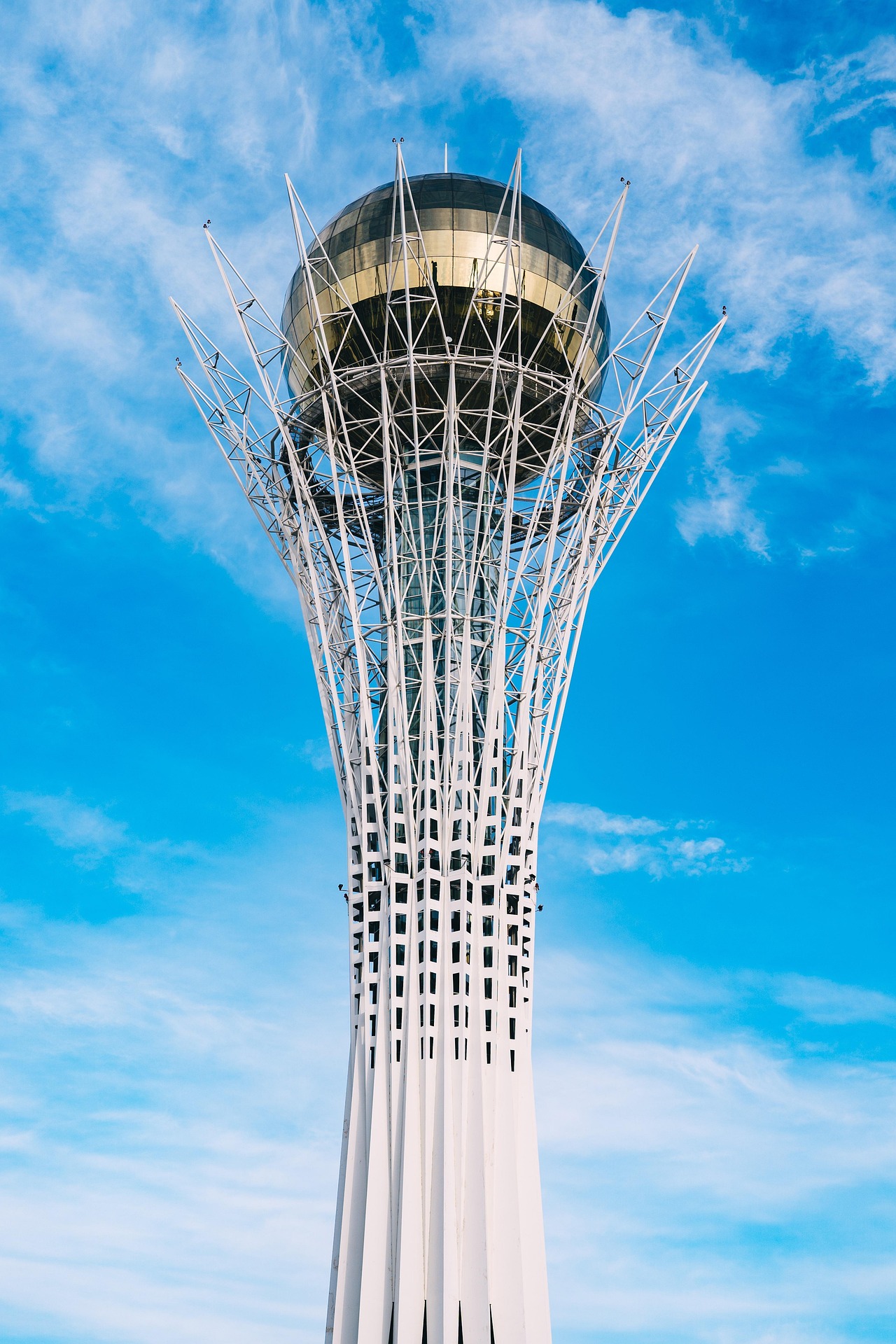
I have already been to Kazakhstan once – in a dream. Between midnight and four in the morning. Astana rose from the endless steppe changing before my eyes every hundred years (because how many successive centuries can you experience in one dream?), opening the glass doors of an abandoned skyscraper in front of me.
I don't have to fight for fame and popularity in my lifetime, play at being a literary influencer, I've outgrown the segregation of authorities, false friends fell out of the rickety vehicle one by one on the bends, desert mirages now shimmer on the steppe, the writer is now a big nobody.
Ragged clouds are reflected in futuristic towers. The streets are wide and almost empty, and time flows more slowly, softly, without clear edges. Anything is possible, but nothing has to happen. It is impossible to enter Khan Shatyr – before my eyes, the doors blend into the shimmering windows, covered with glass so thin that it bends when I rub a handful of sand on it. There will be a new book.
The Hazret Sultan Mosque, built of light-colored stone, dominates the city, rising to the sky with a huge white dome surrounded by four slender minarets. I am heading higher and higher, too fast to read the calligraphic inscriptions on the successive layers of clouds. Ak Orda sounds like a call to the road - it's time to leave the city. Drought-resistant patches of earth lie one after another, crackling under my soles. I'm not from here, but I'm not far from my ancestors.
Step has its own Chan-Shatyr – a mirage of a shopping center where ration cards for goods that no one has bought for thousands of years lie on the counter. Camel or minibus? My feet, bound with pieces of leather, push against each other wearily, and I struggle to take off my shoes. I choose the minibus. Looking at the lines outside the window, I remember the story Serdar told me about his grandmother. I don't count how many hundreds of years ago I left Europe, wanting to understand who I am and what I really want. Grandmothers are extremely important in our genetic memory. They shape us for life. For eternity.
Marta Moldovan-Cywińska
Photo: Pixabay